
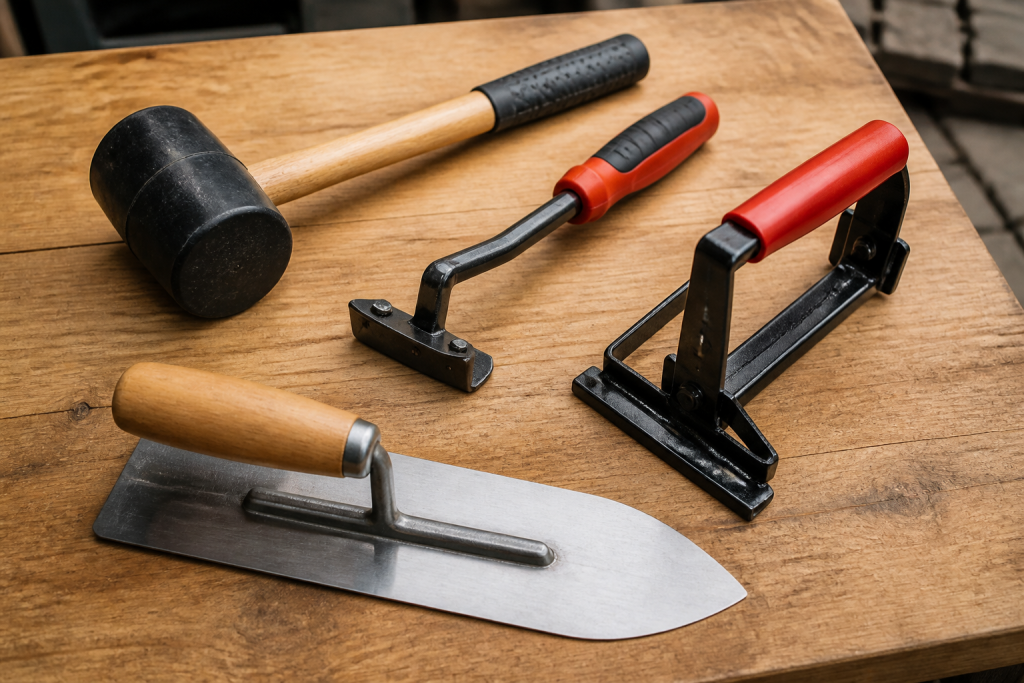
Patio Repair Tools: 5 Essential Gadgets for DIY Success
Patio Repair Tools are indispensable for any DIY enthusiast looking to revitalize their outdoor living spaces. Whether you’re dealing with sunken pavers, crumbling mortar, or unsightly cracks, having the right equipment makes all the difference. This guide will walk you through the five most essential gadgets that will transform your patio repair projects from daunting tasks into achievable successes, ensuring your outdoor area remains a source of pride and relaxation.
Maintaining a beautiful patio requires more than just occasional sweeping; it demands a proactive approach to common issues. With the proper patio repair tools, you can confidently address these challenges, saving both time and money on professional services. We’ll delve into specific tools, their practical applications, and expert tips to help you achieve professional-grade results right in your own backyard.
Key Takeaways for Patio Repair Tools
- Identify the five most crucial Patio Repair Tools that every DIYer needs for effective patio maintenance.
- Understand the specific uses and benefits of each tool, from paver extractors to jointing tools, for various repair tasks.
- Learn practical tips for tackling common patio problems like sunken pavers, cracked concrete, and deteriorating joints with confidence.
- Discover how investing in quality Patio Repair Tools can save you money and extend the life of your outdoor living space.
The Foundation: Essential Patio Repair Tools for Every DIYer
Embarking on patio repair projects can seem daunting, but with the right set of Patio Repair Tools, you can tackle most common issues with ease. The foundation of any successful DIY patio repair lies in having a well-equipped toolbox. These basic tools are not only versatile but also crucial for ensuring safety and efficiency in your work.
Beyond the basics, understanding what tools are essential for basic patio repair helps you prepare adequately. A rubber mallet, for instance, is invaluable for gently tapping pavers into place without causing damage. A stiff-bristle brush is perfect for cleaning joints before repointing, and a spirit level ensures your surfaces are perfectly flat. These are just a few examples of the fundamental patio repair tools you’ll need.
Having these core Patio Repair Tools on hand will empower you to address minor issues before they escalate into major problems. This proactive approach not only preserves the aesthetic appeal of your patio but also extends its structural integrity for years to come.
Rubber Mallet: The Gentle Giant of Patio Repair Tools
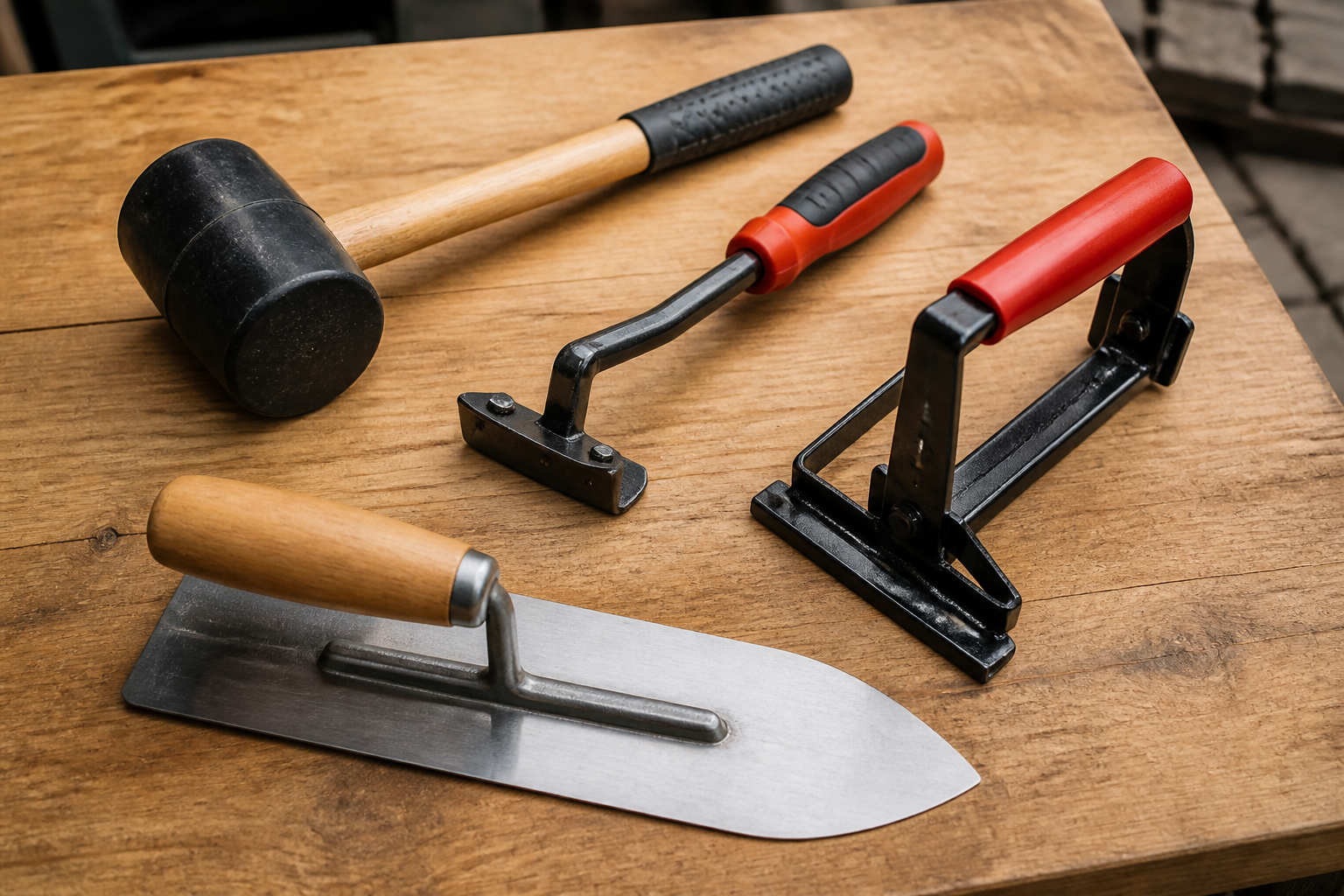
The rubber mallet is arguably one of the most versatile Patio Repair Tools. Its soft head allows you to tap pavers, stones, or slabs into position without chipping or cracking them. This is especially important when setting new pavers or re-leveling existing ones, ensuring a snug fit and a pristine finish.
What is the purpose of a rubber mallet in patio installation and repair? It’s simple: precision without damage. Unlike a metal hammer, a rubber mallet distributes force evenly, making it ideal for delicate adjustments. It’s essential for seating pavers firmly into their bedding layer, achieving a level surface that is both stable and visually appealing.
Always keep a rubber mallet handy when working on any patio surface. It’s a fundamental piece of your collection of Patio Repair Tools, ensuring that every tap contributes to a perfectly aligned and secure patio.
Stiff-Bristle Brush and Trowel: Cleaning and Application Patio Repair Tools
Before any repair work can begin, proper cleaning is paramount. A stiff-bristle brush is an indispensable tool for removing dirt, debris, and old jointing sand from between pavers. This ensures that any new material, whether it’s polymeric sand or mortar, adheres correctly and forms a strong bond.
Following cleaning, a sturdy trowel becomes one of your most important Patio Repair Tools. Trowels are perfect for mixing small batches of mortar, applying concrete patch, or spreading leveling sand. Their flat, broad surface allows for even distribution and smooth finishing, which is crucial for achieving a professional look.
These two simple yet effective Patio Repair Tools work in tandem to prepare your patio for repair and apply materials with precision. They are the unsung heroes of many DIY patio projects, ensuring a clean slate and a smooth application.
For more advanced insights and detailed guides on maintaining your outdoor spaces, consult resources from leading experts in landscaping and hardscaping. Discover additional innovative Patio Repair Tools and Techniques to keep your patio looking its best.
Indispensable Patio Repair Tools for Paver Perfection
Paver patios are beautiful, but they can suffer from shifting or sinking over time. Addressing these issues requires specialized Patio Repair Tools designed to handle the unique challenges of paver systems. These gadgets allow for precise removal, leveling, and resetting, ensuring your paver patio remains even and stable.
When it comes to maintaining the integrity of your paver patio, having the right Patio Repair Tools is non-negotiable. From lifting individual pavers to compacting the base, each tool plays a vital role in restoring your patio to its original glory. Let’s explore some of the must-have tools for achieving paver perfection.
Understanding how to fix a sunken patio paver using specialized tools is a key skill for any patio owner. These tools make the process much more efficient and prevent damage to surrounding pavers, ensuring a seamless repair.
Paver Extractor: Safely Removing Pavers with Patio Repair Tools
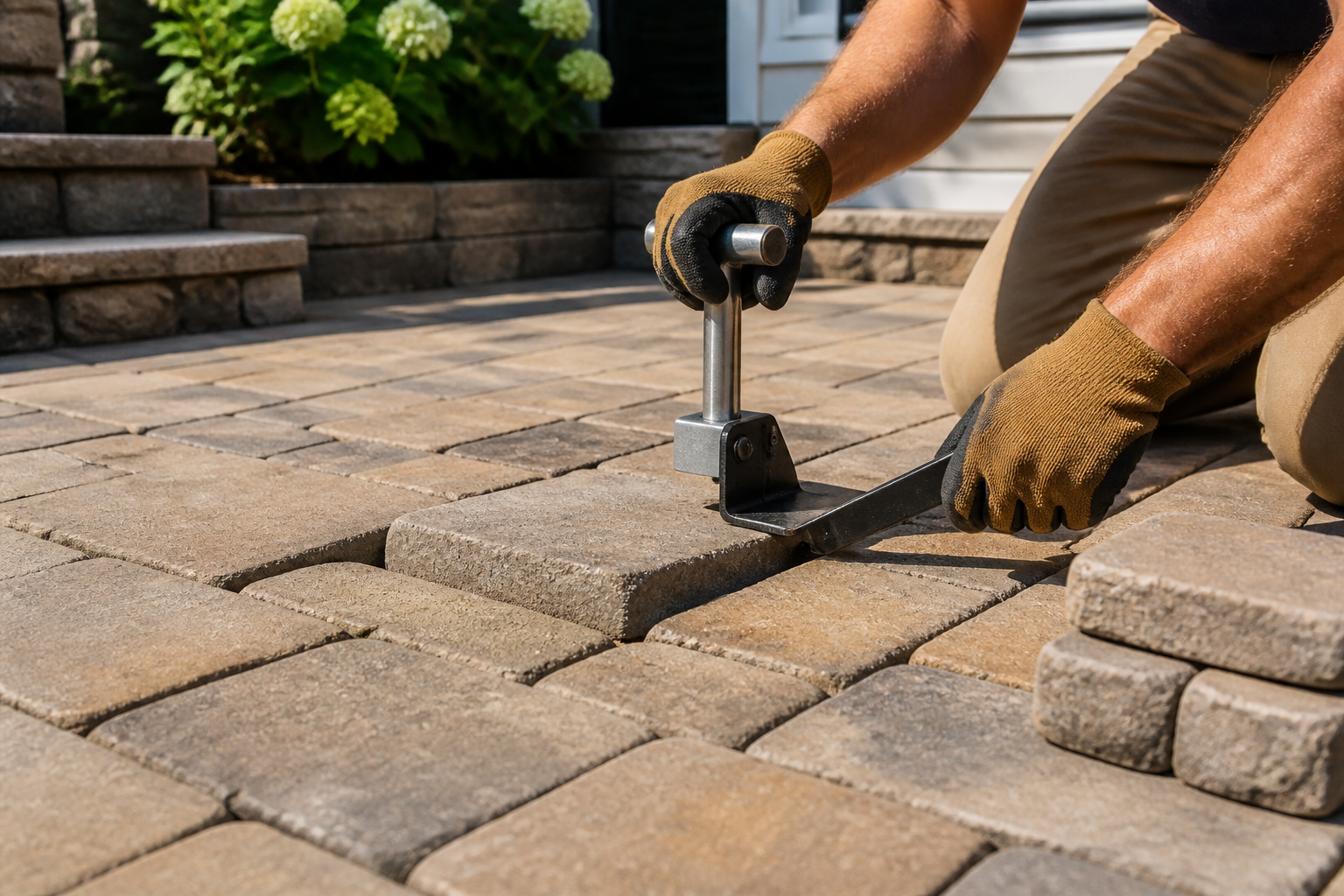
A paver extractor is an ingenious device among Patio Repair Tools that allows you to lift individual pavers without disturbing their neighbors. This tool typically features gripping jaws that latch onto the sides of a paver, enabling you to pull it straight up. This prevents damage to the paver itself and the surrounding jointing material.
How to properly use a paver extractor tool involves careful placement and steady leverage. Position the jaws firmly around the paver, ensuring a secure grip. Then, apply even upward pressure to lift the paver vertically. This method is far superior to prying with a screwdriver, which can chip edges or loosen adjacent pavers, making it one of the most essential Patio Repair Tools for paver work.
Without a paver extractor, removing a single paver for repair can be a frustrating and potentially damaging task. This specialized tool simplifies the process, making it a critical addition to your collection of Patio Repair Tools for any paver-related project.
Hand Tamper: Compacting the Base with Patio Repair Tools
Once a sunken paver is removed, preparing a stable base is crucial for preventing future issues. A hand tamper is one of the most effective Patio Repair Tools for compacting bedding sand or gravel. This heavy tool allows you to apply downward force, creating a dense and stable foundation for your pavers.
Proper compaction ensures that the re-leveled paver will not sink again. After adding new leveling sand, use the hand tamper to firmly press it down, creating a solid and even surface. This step is vital for the long-term stability of your patio and is a testament to the importance of specialized Patio Repair Tools.
For larger areas, a plate compactor might be rented, but for individual paver repairs, a hand tamper is perfectly adequate and a must-have among your Patio Repair Tools. It ensures that the base is as solid as possible before resetting the paver.
Ready to take your patio projects to the next level? Explore our comprehensive guide to DIY Patio Projects and discover how our expert tips and recommended Patio Repair Tools can help you achieve stunning results!
Mastering Joints and Cracks with Specialized Patio Repair Tools
The joints between pavers and cracks in concrete slabs are often the first areas to show wear and tear. Addressing these issues effectively requires specific Patio Repair Tools designed for precision and durability. From repointing mortar to sealing cracks, these tools ensure a clean, long-lasting repair.
Why do I need specific tools for repointing patio joints? The answer lies in achieving a professional finish and ensuring the longevity of your patio. Generic tools simply won’t provide the accuracy and effectiveness needed for these detailed tasks. Specialized Patio Repair Tools for joints and cracks are engineered to deliver optimal results.
Investing in the right Patio Repair Tools for these delicate yet crucial repairs will significantly improve the appearance and structural integrity of your patio. Let’s look at the essential gadgets for mastering patio joints and cracks.
Jointing Tool/Tuck Pointer: Precision for Patio Repair Tools
When repointing patio joints, a jointing tool or tuck pointer is indispensable. These specialized Patio Repair Tools allow you to neatly pack and shape mortar or polymeric sand into the gaps between pavers. They create a smooth, concave, or V-shaped finish that not only looks professional but also helps shed water, preventing erosion.
Using a jointing tool ensures that the new jointing material is evenly distributed and properly compacted, which is critical for preventing weed growth and maintaining the stability of your pavers. Without these specific Patio Repair Tools, achieving a consistent and durable joint would be incredibly difficult, often resulting in a messy and ineffective repair.
For anyone serious about patio maintenance, a good quality jointing tool is a non-negotiable item among their Patio Repair Tools. It’s the key to creating strong, aesthetically pleasing joints that stand the test of time.
Grout Saw/Oscillating Multi-Tool: Removing Old Material with Patio Repair Tools
Before applying new jointing material, it’s often necessary to remove old, deteriorated grout or mortar. The best Patio Repair Tools for removing old patio grout include a grout saw or an oscillating multi-tool with a grout removal attachment. A grout saw allows for precise manual removal, especially in tight spaces.
For larger areas or tougher material, an oscillating multi-tool is a game-changer. Its rapid vibrations and specialized blade can quickly and efficiently cut through old grout, making the removal process much faster and less strenuous. This saves considerable time and effort, highlighting the value of advanced Patio Repair Tools.
Always wear appropriate safety gear, such as safety glasses and a dust mask, when using these Patio Repair Tools for grout removal. This ensures your safety while you prepare your patio for fresh, durable joints.
Advanced Patio Repair Tools for Concrete and Slab Leveling
Concrete patios, while durable, can develop cracks or uneven sections over time. Addressing these issues requires a different set of Patio Repair Tools compared to paver repairs. These tools are designed for working with concrete, ensuring strong bonds and smooth finishes for lasting repairs.
Are there specialized tools for fixing cracks in a concrete patio? Absolutely. From cleaning and widening cracks to applying and smoothing fillers, specific Patio Repair Tools are essential for effective concrete repair. Using the right tools prevents further damage and ensures the repair blends seamlessly with the existing surface.
For those looking to tackle more significant concrete issues, understanding these advanced Patio Repair Tools is crucial. They provide the means to restore not just the appearance but also the structural integrity of your concrete patio.
Wire Brush and Trowel: Concrete Crack Repair Tools
For fixing cracks in a concrete patio, a sturdy wire brush is essential for cleaning out loose debris, dirt, and old sealant from within the crack. This creates a clean surface for the new filler to adhere to. For deeper or wider cracks, a grinder might be used to create a clean groove, but for most DIY tasks, a wire brush is sufficient.
Once cleaned, a small trowel or a caulk gun becomes your primary tool for applying concrete crack filler. The trowel allows for precise application and smoothing of the filler, ensuring it’s flush with the patio surface. These fundamental Patio Repair Tools are critical for achieving a durable and aesthetically pleasing crack repair.
Properly sealing cracks with these Patio Repair Tools prevents water infiltration, which can lead to further deterioration and freeze-thaw damage. This simple maintenance can significantly extend the life of your concrete patio.
Leveling Tools: Ensuring a Smooth Surface with Patio Repair Tools
What are the must-have tools for DIY patio slab leveling? A long spirit level is paramount for identifying uneven areas and ensuring your repairs result in a flat surface. For significant leveling, a straightedge or screed board is used to spread and level new concrete or bedding material, creating a uniform plane.
For smaller, localized dips or humps, a hand float or a bull float can be used to smooth the concrete surface after application. These Patio Repair Tools help to work out imperfections and bring a fine finish to the concrete, making it safe and pleasant to walk on. Achieving a perfectly level patio is key to both its functionality and appearance.
These leveling Patio Repair Tools are crucial for any concrete patio repair, ensuring that your efforts result in a smooth, even, and safe surface. They are an investment in the long-term quality of your outdoor space.
Maintaining Your Patio Repair Tools for Longevity
Just as you maintain your patio, it’s equally important to care for your Patio Repair Tools. Proper maintenance ensures their longevity, keeps them in optimal working condition, and makes your next DIY project much easier. Neglecting your tools can lead to rust, reduced effectiveness, and the need for premature replacements.
How to maintain patio repair tools for longevity involves a few simple steps that can significantly extend their lifespan. After each use, clean your tools thoroughly to remove any dirt, concrete, or mortar residue. This prevents material from hardening on the surfaces, which can impair their function.
Store your Patio Repair Tools in a dry environment to prevent rust. Applying a light coat of oil to metal parts before storage can also provide an extra layer of protection. This simple routine will ensure your tools are ready for action whenever your patio needs a little TLC.
Cleaning and Storage of Patio Repair Tools
After completing any patio repair task, immediately clean all your Patio Repair Tools. For tools used with wet materials like mortar or concrete, rinse them thoroughly with water before the material has a chance to set. A stiff brush can help remove stubborn residue. For dry tools, a wire brush or cloth is usually sufficient.
Once clean, ensure all tools are completely dry before storing them. Moisture is the enemy of metal tools, leading to rust and corrosion. Hang tools on a pegboard or store them in a toolbox in a dry shed or garage. Proper storage not only protects your Patio Repair Tools but also keeps them organized and easily accessible for future projects.
Taking a few minutes to clean and properly store your Patio Repair Tools after each use is a small effort that yields significant returns in terms of tool lifespan and performance. It’s an essential part of being a responsible and efficient DIYer.
Where to Find Your Patio Repair Tools
Finding the right Patio Repair Tools is crucial for successful DIY projects. Many homeowners wonder where they can purchase professional-grade patio repair tools or find rental options for heavy-duty equipment. The good news is that a wide array of options exists, catering to various needs and budgets.
Local hardware stores and large home improvement centers are excellent starting points for purchasing essential Patio Repair Tools. They typically stock everything from rubber mallets and trowels to jointing tools and hand tampers. For more specialized items like paver extractors or plate compactors, you might consider dedicated landscaping supply stores or online retailers.
For heavy-duty patio repair equipment, such as large concrete saws or power washers, rental options are often more cost-effective than purchasing. Many equipment rental companies offer a wide range of tools for short-term use, providing access to professional-grade Patio Repair Tools without the significant upfront investment.
Who manufactures durable tools for concrete patio repair? Reputable brands like Marshalltown, Kraft Tool Co., and Bon Tool are known for producing high-quality, durable concrete and masonry tools. Researching these brands can help you find reliable Patio Repair Tools that will last through many projects.
Conclusion: Empowering Your DIY Patio Projects with the Right Patio Repair Tools
Embarking on patio repair projects can be incredibly rewarding, especially when you’re equipped with the right Patio Repair Tools. From the gentle precision of a rubber mallet to the specialized grip of a paver extractor, each tool plays a vital role in restoring the beauty and functionality of your outdoor living space.
We’ve explored five essential gadgets that form the backbone of any successful DIY patio repair, along with practical tips for tackling common issues like sunken pavers, crumbling joints, and cracked concrete.
Remember, investing in quality Patio Repair Tools is an investment in the longevity and aesthetic appeal of your patio. By understanding their uses and maintaining them properly, you empower yourself to address problems proactively, saving time and money in the long run. With these indispensable gadgets in your arsenal, you’re well-prepared to achieve flawless results and enjoy your revitalized patio for years to come.
Take pride in your outdoor space, knowing you have the expertise and the Patio Repair Tools to keep it looking its best.
Frequently Asked Questions About Patio Repair Tools
What tools are essential for basic patio repair?
For basic patio repair, essential patio repair tools include a rubber mallet, a stiff-bristle brush, a jointing tool or tuck pointer, a trowel, a level, safety glasses, and gloves. For more involved repairs, you might also need a paver extractor, a tamper, and a specialized cleaning solution.
How do I fix a sunken patio paver using specialized tools?
To fix a sunken paver, you’ll need specialized patio repair tools like a paver extractor to safely lift the paver without damaging adjacent ones. Once lifted, remove existing bedding sand, add new leveling sand or gravel, compact it with a hand tamper, and then reset the paver using a rubber mallet to ensure it’s flush with its neighbors.
Why do I need specific tools for repointing patio joints?
Specific patio repair tools for repointing patio joints, such as a jointing tool or tuck pointer, are crucial for achieving a clean, durable, and aesthetically pleasing finish. These tools allow you to precisely pack and shape jointing compound or mortar into the gaps between pavers, ensuring even distribution and proper adherence, which enhances stability and prevents weed growth.
What are the best tools for removing old patio grout?
The best patio repair tools for removing old patio grout include a grout saw or a utility knife with a carbide-tipped blade for precise cutting. For tougher, larger areas, an oscillating multi-tool with a grout removal attachment can significantly speed up the process. Always wear safety glasses and a dust mask when performing this task.
What is the purpose of a rubber mallet in patio installation and repair?
A rubber mallet is an indispensable tool in both patio installation and repair because its soft head allows you to tap pavers and slabs into place without chipping, cracking, or damaging their surface. It helps in setting pavers firmly into the bedding layer, ensuring they are level and secure without marring their appearance.
Are there specialized tools for fixing cracks in a concrete patio?
Yes, specialized patio repair tools are available for fixing cracks in a concrete patio. These include a wire brush or grinder for cleaning and widening the crack, a caulk gun for applying concrete crack filler, and a trowel or float for smoothing the filler flush with the patio surface. For larger cracks, a concrete saw might be used to create a clean-edged groove for repair material.
How to properly use a paver extractor tool?
To properly use a paver extractor tool, ensure the jaws are clean and free of debris. Position the tool over the paver you wish to remove, allowing the jaws to grip the sides securely. Apply even upward pressure, often by stepping on the handle or using a lever mechanism, to lift the paver vertically, minimizing disturbance to surrounding pavers.
Upgrade Your Outdoor Space with Premium Patio Repair Tools
At Chair Sling Store, we provide more than just slings; we offer a wide range of durable patio repair tools and parts to help you revitalize your outdoor furniture and hardscapes. Achieve a professional finish with our quality selections.